Systems strengthening for assistive technology workforce
Lack of trained workforce is a large factor affecting access to assistive technology. The Global Report on assistive technology in 2022 found that globally only 1 in 10 countries had adequate and trained resources for any of the functional domains, and 14 per cent had no relevant training and education.
In low- and middle-income countries, the challenge is even greater; 93 per cent have fewer than one audiologist per million, optometrists operate at densities of less than 0.08 per 100k contrary to the recommended 1 per 50k, and there is usually only one prosthetics and orthotics professional per million, contrary to the suggested minimum of five per million.
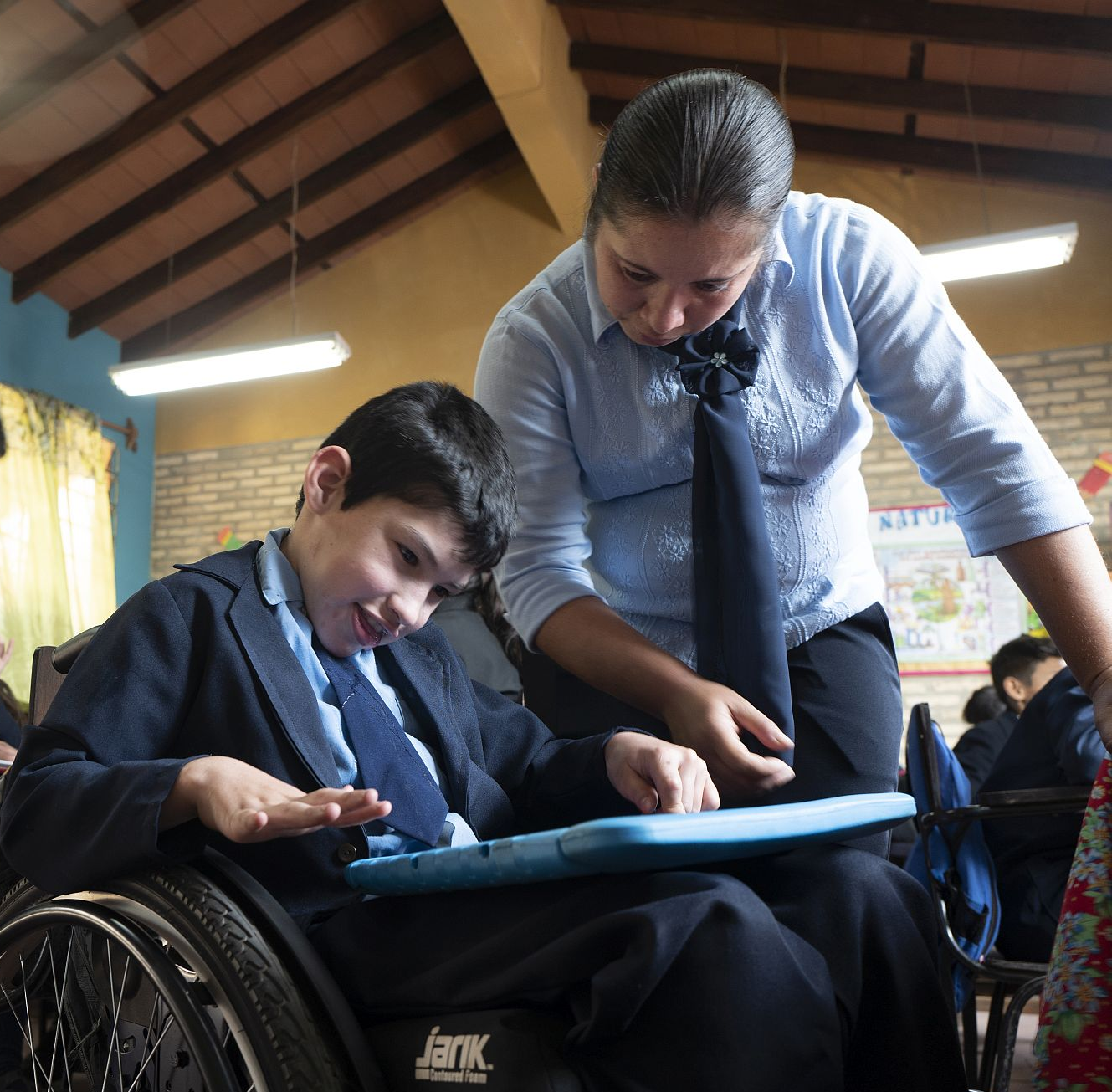
A trained workforce is critical for assistive product provision and its associated services to ensure the appropriate screening, referrals, assessment, prescription, fitting, user training, follow-up, repair and maintenance. However, training can be costly and time-consuming, and in many cases, accredited courses are not available locally, making it very difficult to address the shortage in the short run.