Assistive technology and the SDGs
Why does assistive technology matter for achieving the SDGs?
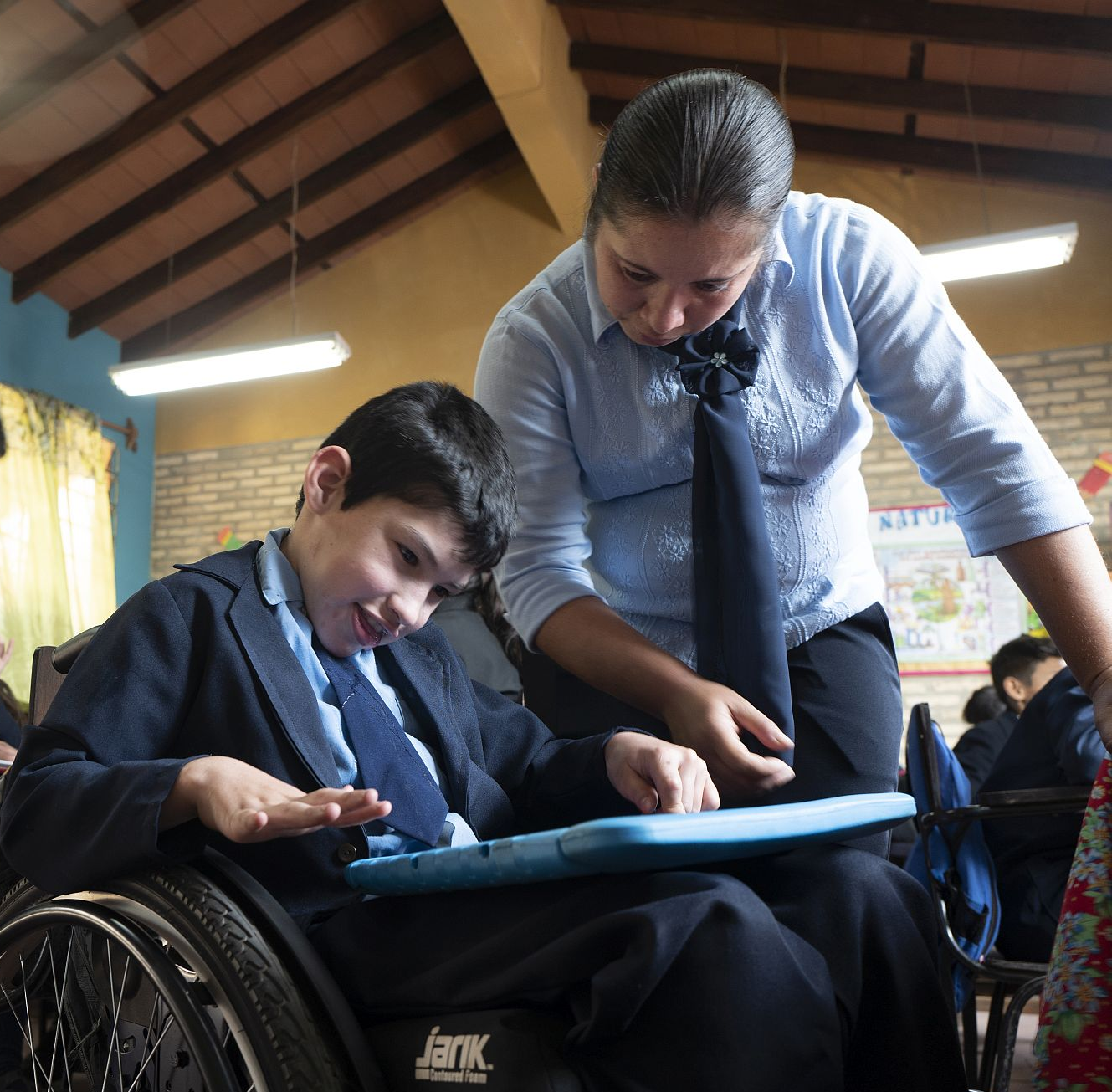
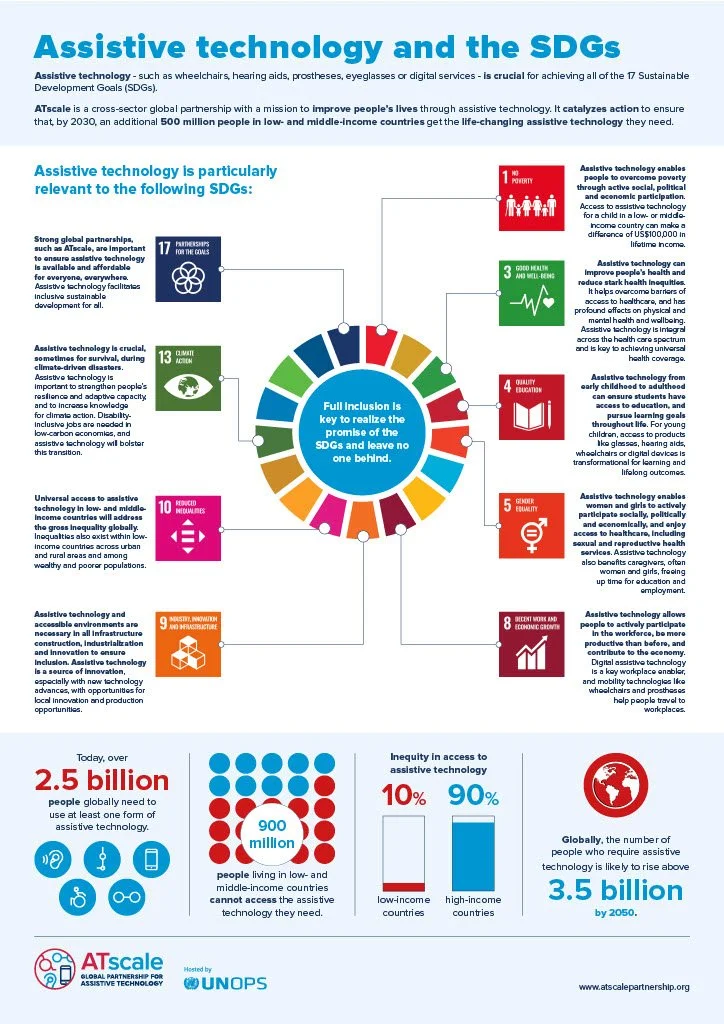
Assistive technology - such as wheelchairs, hearing aids, prostheses, eyeglasses or digital services - is crucial for achieving all of the 17 Sustainable Development Goals (SDGs).
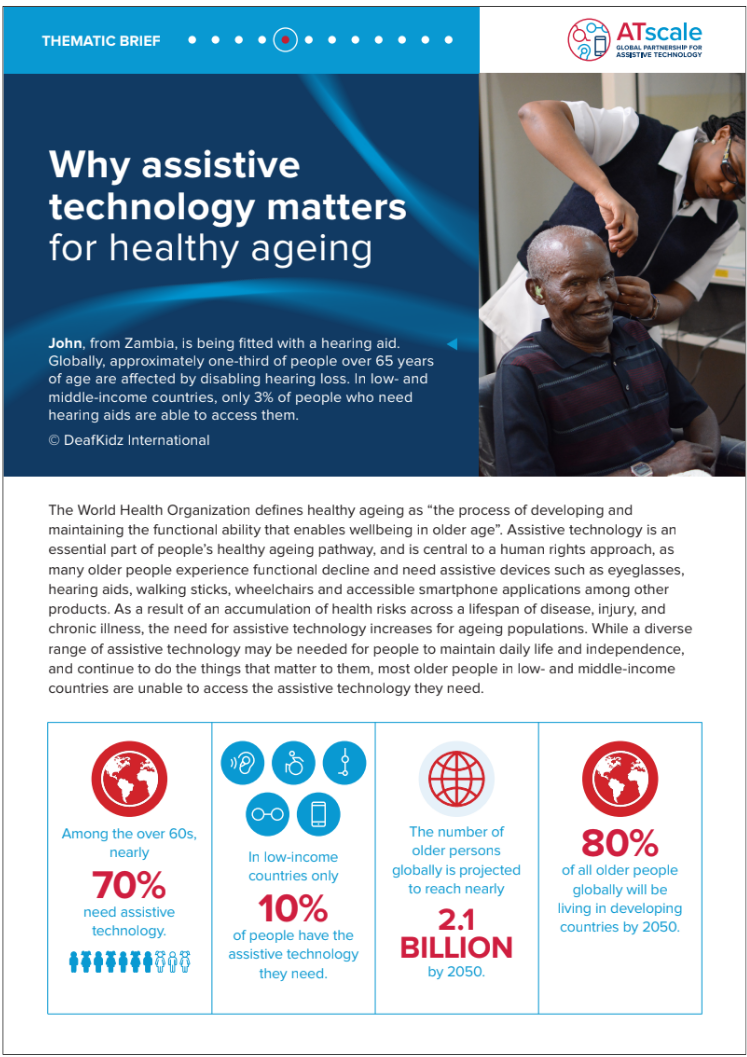
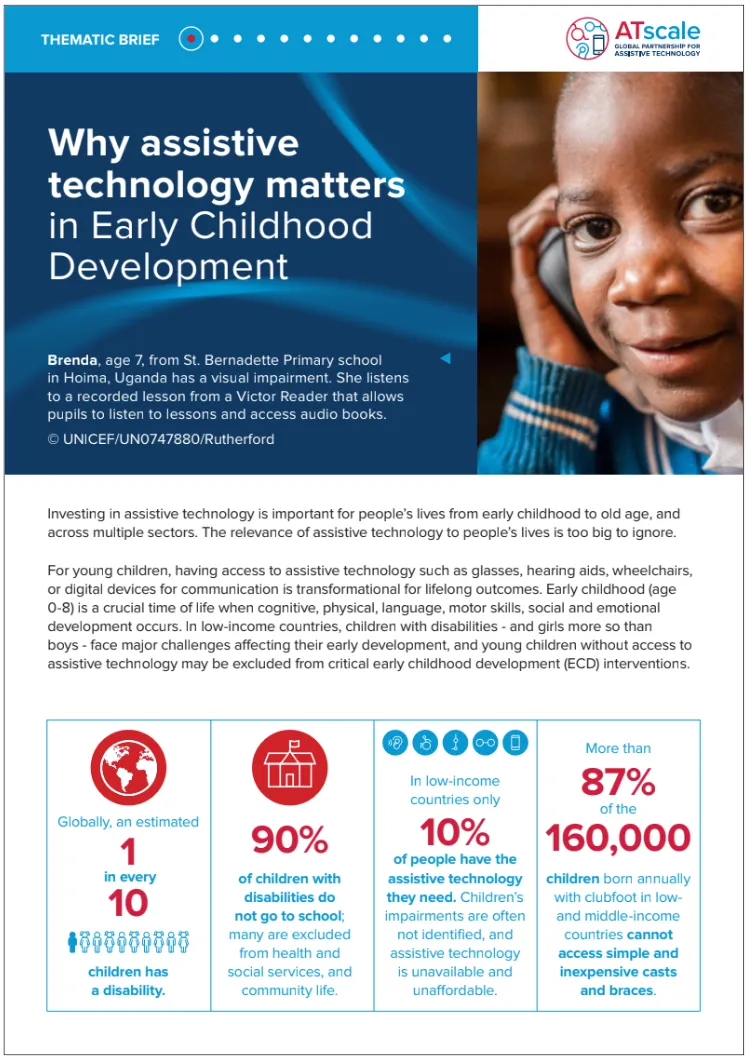
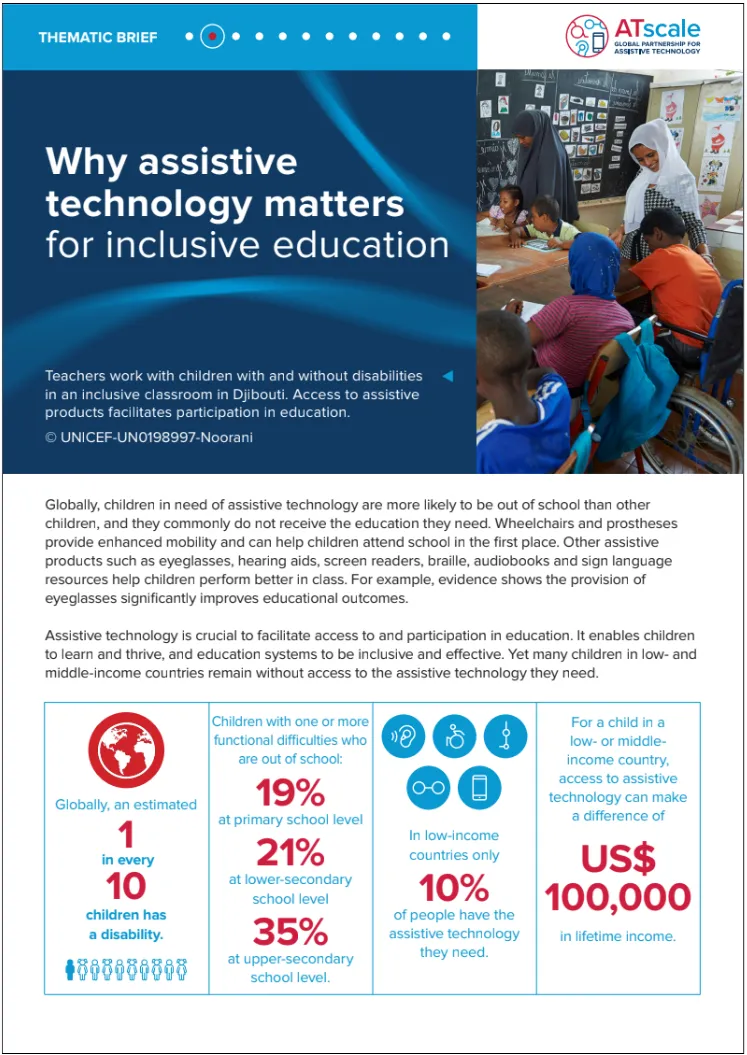
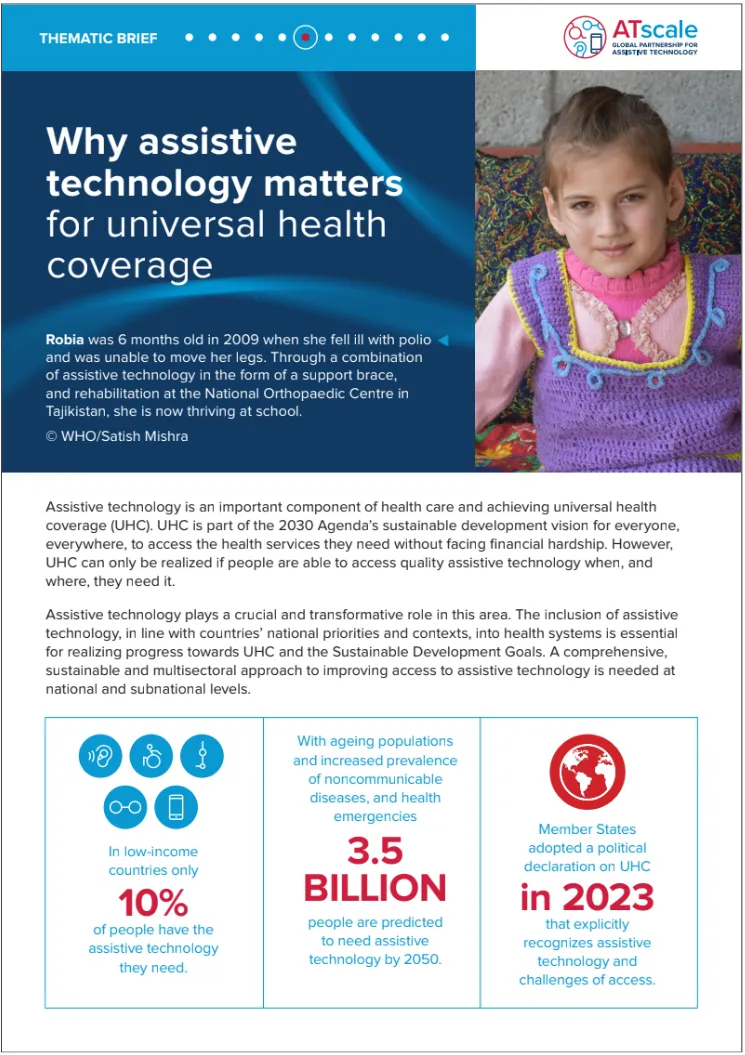
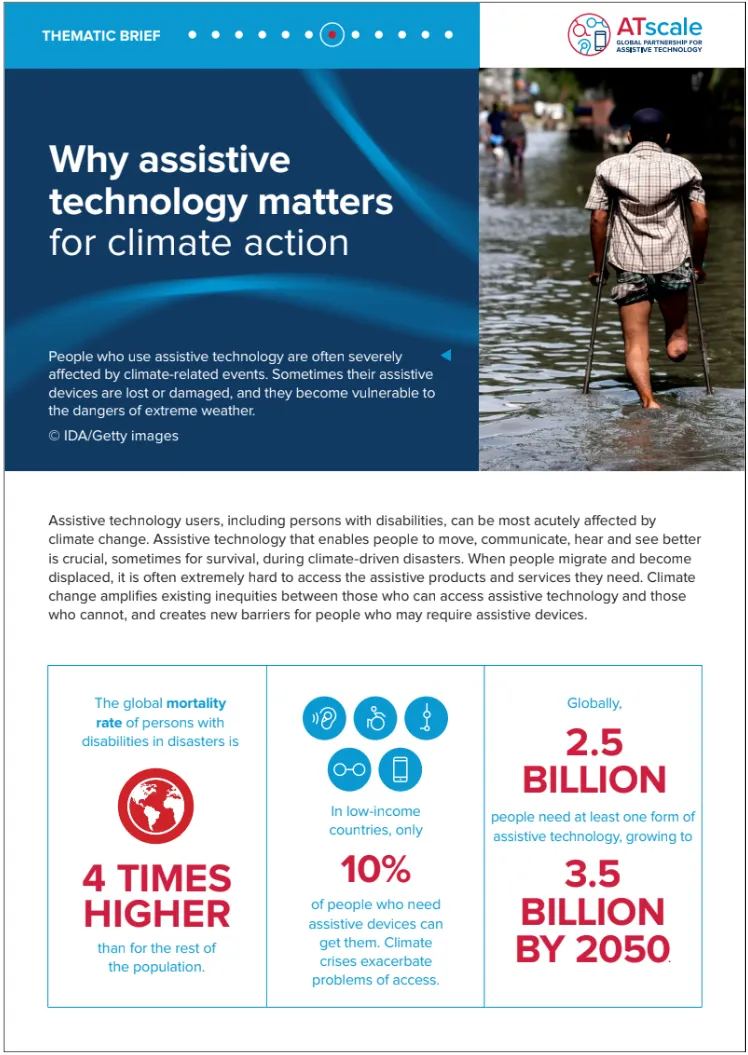
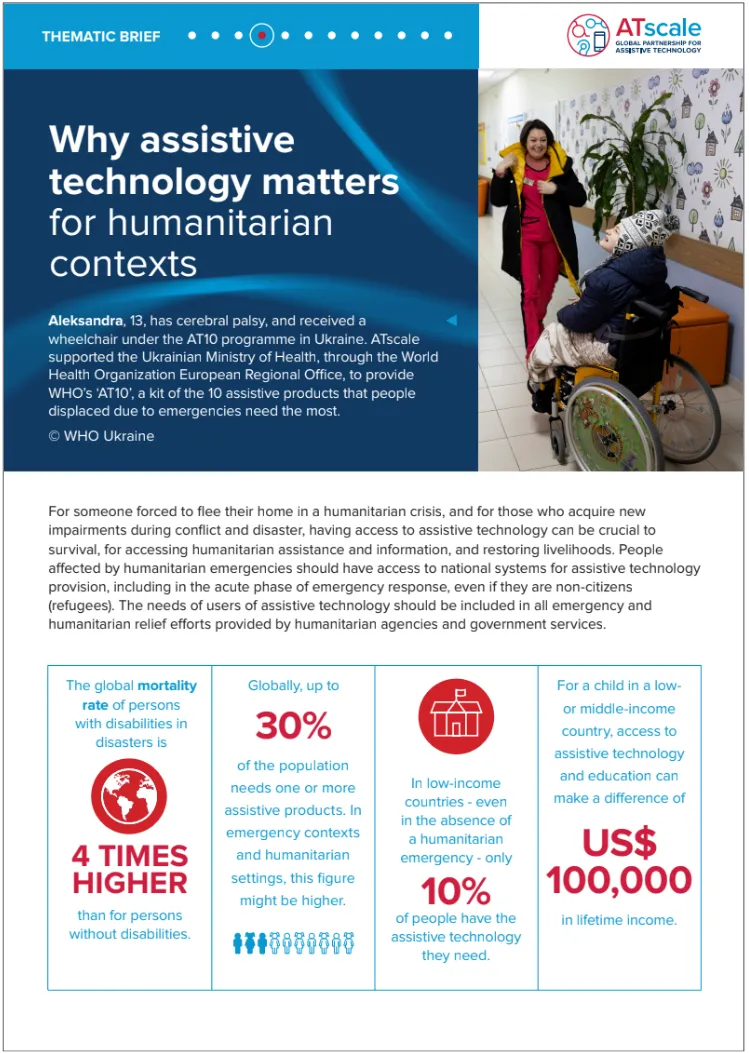
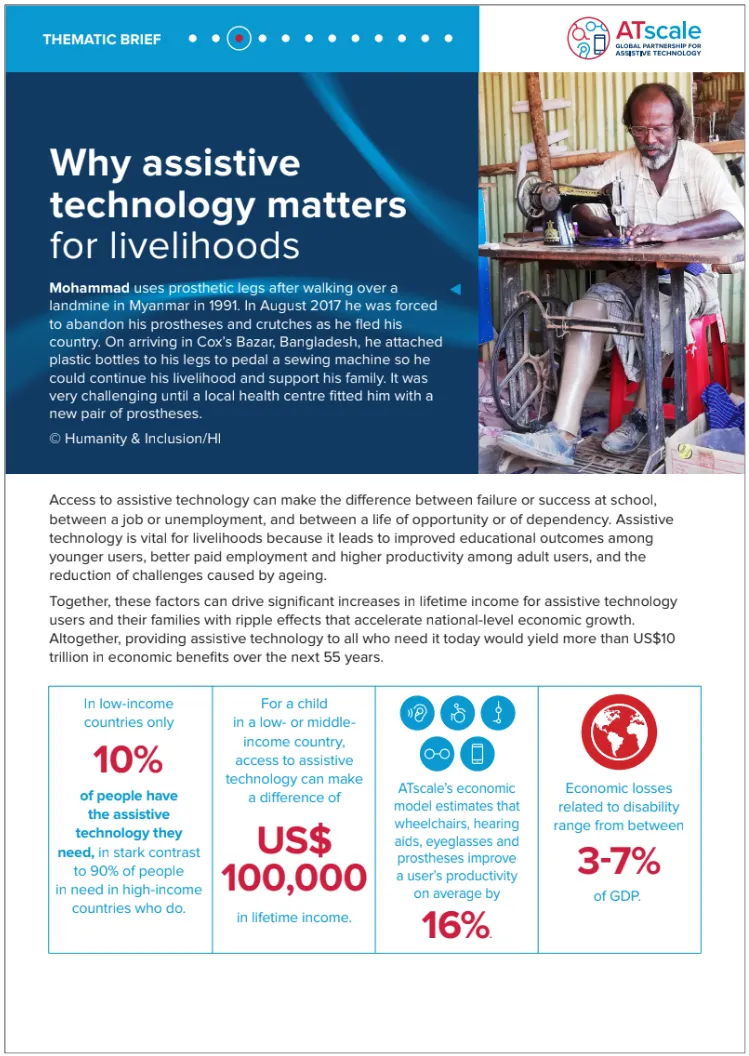
Assistive technology cuts across and is relevant to all SDGs and sectors including health, education, disability, healthy ageing, noncommunicable diseases, water and sanitation, employment, livelihoods, economic development, security, social protection, justice, environment and responses to humanitarian crises.
‘Leaving no one behind’ is impossible without universal access to assistive technology. And yet, assistive technology is a historically neglected and under-resourced area, suffering from massive inequities. People face access barriers related to their age, disability, gender, type of functional difficulty, living environment and socioeconomic status.
Inclusion is key to realizing the Sustainable Development Goals (SDGs) and leaving no one behind. There will not be full inclusion while people are unable to access assistive technology. Assistive technology cuts across all 17 SDGs and is particularly relevant to some.